Houston and Other Gulf, East Coast Ports Face Strike Threat as Dockworkers Battle Automation
With a Jan. 15 deadline approaching, 45,000 longshoremen are threatening to halt East and Gulf coast ports unless talks resolve a dispute over automated cranes.
By Kendra Konchanuk ·
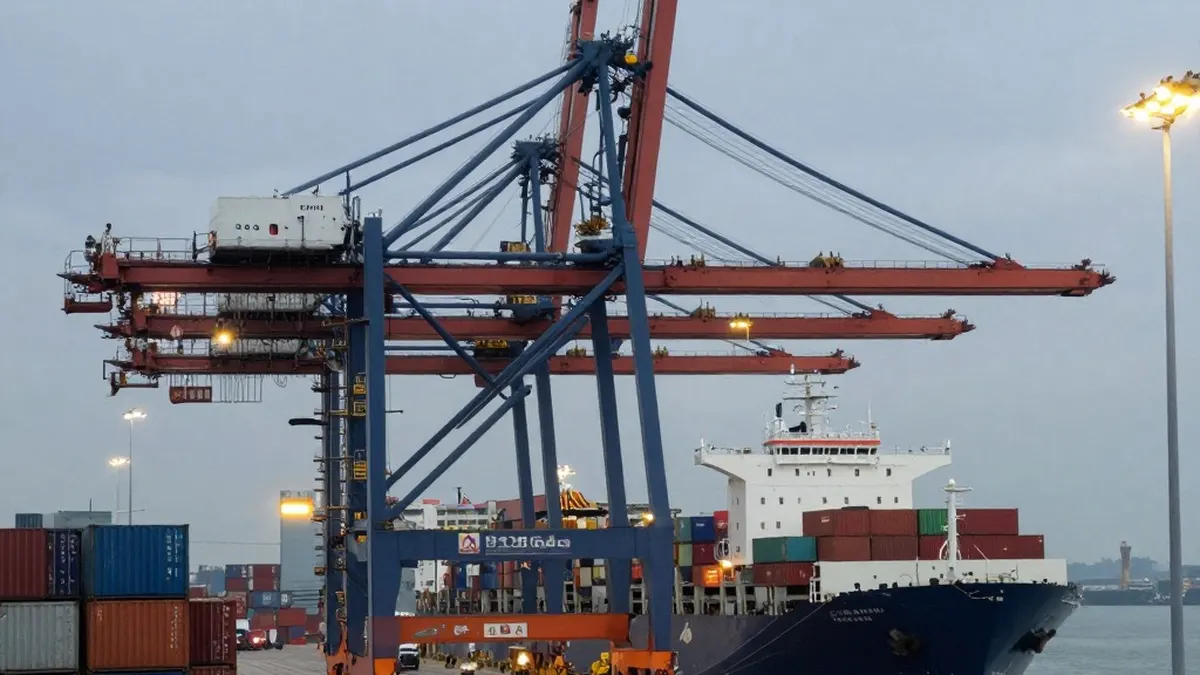
Roughly 45,000 U.S. longshoremen are threatening to strike at East and Gulf coast ports, including the Port of Houston, in a dispute over machines that could replace their jobs. A walkout could hurt the American economy just as President-elect Donald Trump prepares to return to the White House.
The workers, members of the International Longshoremen's Association (ILA), have been here before. They staged a three-day strike last fall, then suspended it in October until Jan. 15 after reaching a tentative agreement with ports and shipping companies on a 62% pay raise over six years. Members must still approve a final contract before the higher wages take effect, and that is where the difficulty lies.
Negotiations between the ILA and the U.S. Maritime Alliance, which represents ports and shippers, resume Tuesday. The central issue is automation, specifically semi-automated cranes run by software or by employees working remotely to move containers onto trucks or trains. Conventional cranes are operated by a person at the controls.
ILA president Harold Daggett and the union oppose any added automation at East and Gulf coast ports, arguing the machines are no more efficient than human labor. "This isn't about meeting operational needs," wrote Dennis Daggett, the union's executive vice president and Harold Daggett's son, last month. "It's about replacing workers under the guise of progress while maximizing corporate profits at the expense of good-paying, family-sustaining U.S. jobs." Port operators and shippers counter that U.S. ports are falling behind more automated hubs such as Rotterdam, Dubai and Singapore.
With the deadline so close, the two sides have little time. "They're not giving themselves a whole lot of time," said Jonathan Gold, a vice president at the National Retail Federation who handles supply chain and trade issues. Trump has sided with the union. After meeting Harold Daggett at Mar-a-Lago, the president-elect posted that the money saved through port automation is "nowhere near the distress, hurt and harm it causes for American workers."
The economic stakes are considerable. East and Gulf coast ports handle more than half of the nation's shipping container traffic. Mark Zandi, chief economist at Moody's Analytics, said a strike of less than a week would not materially affect the broader economy because inventories are generally ample. A longer stoppage would bring growing shortages, with costs rising from an estimated $500 million a day to more than $2 billion a day if it lasts beyond a month.
Gold said supply chains need three to five days to recover from a one-day disruption, and that a stoppage longer than five days would mean weeks of serious recovery. He noted that an 11-day shutdown at West Coast ports in 2002 "took close to six months to recover from." Christina Boni of Moody's Ratings warned that a longer strike could hurt retailers, as seasonal and fashion goods might arrive after their peak selling period and require markdowns.
Companies are already preparing. Some are rerouting shipments to the West Coast or Canada, and Maersk urged customers to collect loaded containers from ports before Jan. 15. Hapag-Lloyd announced a "work disruption surcharge" effective Jan. 20 of $850 for 20-foot containers and $1,700 for 40-foot containers.
Under the current contract, top-paid dockworkers earn $39 an hour, or $81,000 a year, a rate that would climb above $60 an hour under the October deal. A 2019-2020 report by the Waterfront Commission, which oversees New York Harbor, found that a third of longshoremen based there earned $200,000 or more annually with overtime, not counting royalty payments on cargo. Evidence on automation remains mixed: a 2023 study by researchers at the Center for Innovation in Transport in Barcelona found "no clear evidence confirming that automated terminals outperform conventional ones," though future advances could change that.
Source: Houston Public Media