Author Benjamin Moser Says Jewish Anti-Zionism Is a Long-Buried Tradition
In a new book and a series of interviews, the Pulitzer-winning writer argues that Jewish opposition to Zionism has deep roots, even as critics fault his methods and tone.
By Live Media Wire Staff ·
Pulitzer prize-winning author Benjamin Moser has published Anti-Zionism: A Jewish History, a book that profiles a dozen Jews who opposed Zionism before and after the founding of Israel. He describes them as part of "a hidden tradition" of people who were long dismissed and despised but, in his view, were ultimately proven right.
The cast ranges widely. Aaron Samuel Tamares was a Polish rabbi who began speaking out against Jewish nationalism in the late 19th century. Edwin Montagu was a British diplomat who tried to derail the 1917 Balfour declaration. Avi Shlaim is an Israeli "new historian". Another subject, the Israeli human rights lawyer Felicia Langer, appears in an episode from 1987, when a client at Neve Tirza women's prison said inmates had been sprayed with a chemical agent. Langer took a contaminated tissue and inhaled from it, hoping a doctor could identify the toxin.
Moser is the grandson of Holocaust survivors and was raised in the Reform tradition in Houston. He says he rarely questioned liberal Zionist assumptions, among them that a Jewish state was a just answer to centuries of persecution and that Arab intransigence was the main obstacle to peace. A turning point came in the summer of 2016, when he was invited to speak at the Palestine festival of literature, which takes visitors through the West Bank. Walking through Hebron, where Palestinians face severe movement restrictions and settler abuse, he was overwhelmed by what he saw as injustice.
He mostly kept his doubts private, apart from a 2021 Substack post, until last year. Then he published a personal essay in the first issue of Equator magazine, written in the wake of the Hamas attack of 7 October and the suffering imposed on civilians in Gaza. He says the reaction was huge and entirely positive, and the essay will appear in the forthcoming Best American Essays. In it he reserves particular anger for American Jewish leaders.
Asked what changed his mind, Moser pointed to the settler-colonial element: foreigners backed by imperial powers arriving in a land that was overwhelmingly non-Jewish and telling its inhabitants to leave. That is not the consensus view, and early Zionist immigrants were mostly unarmed refugees fleeing pogroms. Moser also accepts that the book leans toward polemic. Pressed by Piers Morgan on a critic's charge of oversimplification, he said: "I do think it's black and white!"
The book arrives at a fraught moment for the pro-Palestine movement, with rhetoric hardening as Israel's killing in Gaza continues. Reviewers in the New Yorker, the New York Times and elsewhere have objected to its portrait of Zionism as fundamentally malevolent and Palestinians as essentially blameless, and some have flagged factual errors. The New Yorker's Isaac Chotiner called Moser's approach to facts "slovenly to the point of reckless", and argued that Zionist press articles the book cites as whitewashing Nazi atrocities do nothing of the kind once placed in context.
Moser attributes much of the criticism to politics, saying many of his detractors are liberal Zionists. "Israel is not something with problems," he said. "It is a problem." He says he stands by the book completely, whatever disputes over footnotes arise while people are being killed every day.
He has a good deal at stake. His biography of Clarice Lispector made his name, and his authorized biography of Susan Sontag won the Pulitzer. He lives in the Netherlands with his partner, the novelist Arthur Japin. Asked why he took the risk, he said that in a time of genocide a person can stay on the sidelines or, as they say in Brazil, "give your face to be beaten."
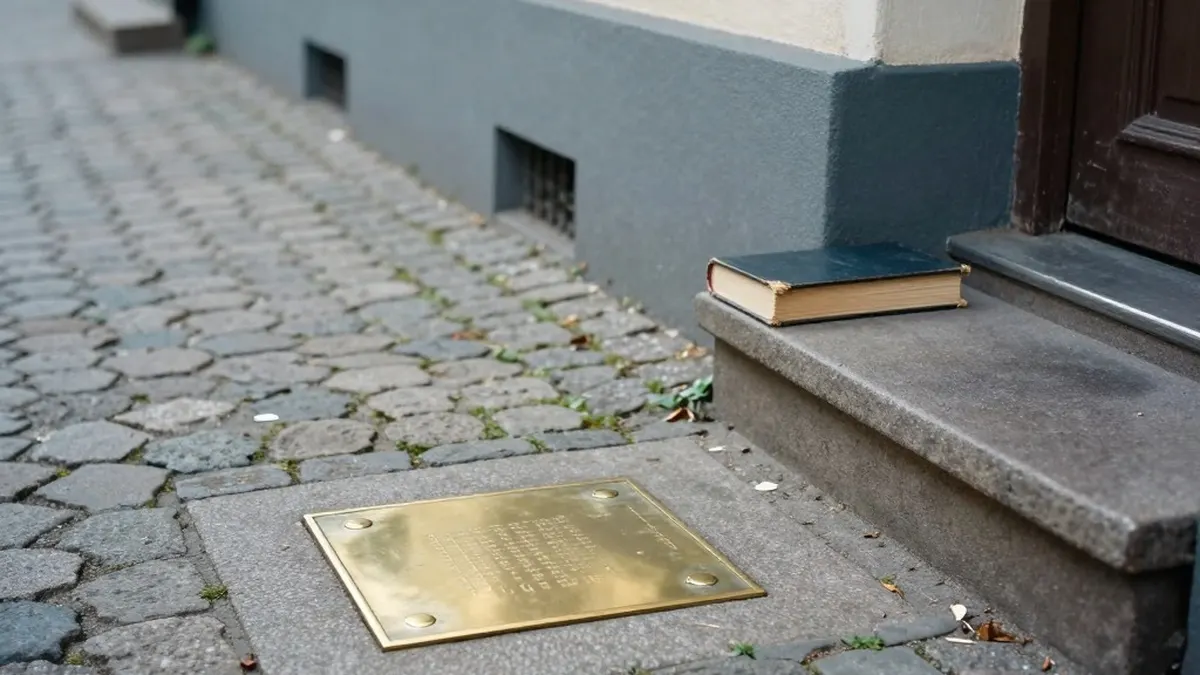
Moser recently visited Berlin for his niece's batmitzvah and stopped at the memorial stones outside his grandparents' former home. His grandfather, Franz Egon Moses, had spent time in Mandatory Palestine before moving to the US, and Moser now owns his copy of Herzl's Zionist Writings. He concedes his grandfather might have rejected his views. "I hope they'd be proud of me," he said, adding that those who stayed quiet while his family was persecuted are not people he respects.
Source: The Guardian