Russian Aid Transforms North Korea's Missile and Drone Capabilities
Pyongyang is modernizing its arsenal with Moscow's technical support, prompting Seoul to test a new hypersonic missile in response.
By Luis Fernandez ·
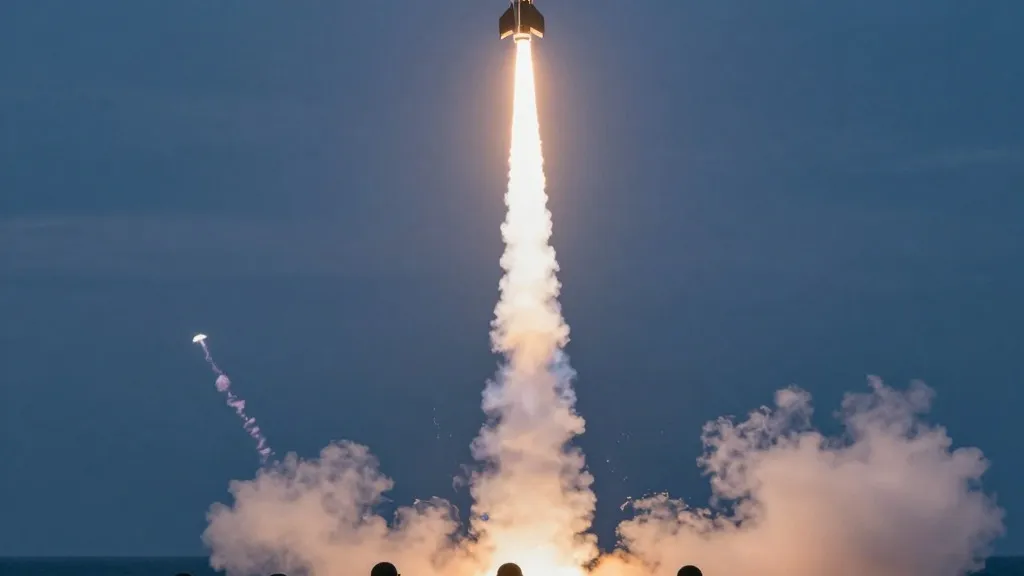
A significant shift in the balance of power on the Korean Peninsula is underway as North Korea leverages its partnership with Russia to overhaul its military hardware. The rapid modernization of Pyongyang's ballistic missiles and the start of mass drone production have raised urgent concerns in Seoul and among its allies. This escalation marks a tangible change in the strategic landscape following the deepening ties between the two nations since Russia's full-scale invasion of Ukraine.
The cooperation between Moscow and Pyongyang has become a two-way exchange of resources and expertise. Russia is providing North Korea with critical military developments and technical data, while North Korea supplies soldiers, workers, and weapons. This renewed military alliance has allowed the North to accelerate the modernization of its armed forces, a process that had previously been slower and less integrated with advanced foreign technology.
Recent testing activity highlights the tangible results of this collaboration. In early October, North Korea launched a tactical ballistic missile that it claims can carry a nuclear warhead. While South Korea and Japan estimated the flight distance at approximately 700 kilometers, Pyongyang asserted a range of 1,000 kilometers. Analysts note that access to Russian deployment data and feedback has helped North Korea refine the accuracy and maneuverability of its weapons, making the threat to its southern neighbor more substantial.
Seoul's response to the latest missile test was notably more aggressive than in the past. Instead of issuing a standard statement describing the launch as provocative, South Korea conducted its first test-fire of a hypersonic ballistic missile just five days later. President Lee Jae Myung personally observed the launch, a move that signals growing unease in Seoul regarding the pace of North Korea's technological progress. This direct demonstration of force underscores the heightened tension between the two states.
Beyond missiles, the partnership has enabled North Korea to build a robust unmanned systems capability. Observing how inexpensive drones overwhelmed costly air defense systems in Ukraine and the Middle East, Pyongyang has moved to produce attack drones in large numbers. During a military drill last month, a swarm of drones attacked a target island simultaneously with cruise and ballistic missiles striking from different directions. This coordinated tactic demonstrates a new level of operational complexity that challenges traditional defensive strategies.
Defense experts warn that these evolving tactics will force South Korea and its allies to redesign their air defense architectures. Such upgrades are expected to come at an exorbitant cost, creating a financial and logistical burden for Seoul. The integration of drone swarms with ballistic and cruise missiles complicates interception efforts, requiring more sophisticated and expensive countermeasures to maintain adequate protection.
This report aligns with other recent disclosures about the scope of the Russian North Korean partnership. In September, Bloomberg reported that up to 25,000 North Korean citizens are working at Russian military plants, including facilities in Alabuga, Tatarstan, where they produce military drones. Additionally, a North Korean missile unit equipped with 120 ballistic missiles and six launchers has begun deploying in western Russia, potentially for strikes against Ukraine. These movements indicate that the alliance is moving beyond symbolic gestures to concrete operational integration.
The current developments follow a series of earlier announcements by North Korea. In June 2026, the country tested a modernized 240mm multiple-launch rocket system, a tactical ballistic missile, and a 155mm long-range artillery shell. Russia also requested KN-30 ballistic missiles from North Korea in August. As the two countries continue to exchange technology and personnel, the military dynamic in the region is becoming increasingly complex and volatile.
Source: Ukrainska Pravda