Tesla Slips Optimus Robot Deliveries to Late 2027 Amid Hand and AI Hurdles
CEO Elon Musk acknowledges that mechanical durability and software generalization remain significant barriers to the humanoid’s commercial launch.
By Christopher Reed ·
The promise of a general-purpose humanoid robot capable of performing dangerous industrial tasks has hit a mechanical and software wall. On Tesla’s third-quarter 2026 earnings call, CEO Elon Musk confirmed that the company is not yet ready to ship its Optimus units to outside customers, pushing the target for external deliveries to late 2027. The delay stems from persistent challenges in the robot’s hand mechanics, overall durability, and the underlying artificial intelligence required to make it useful in real-world scenarios.
Musk detailed that early production has begun on Tesla’s high-volume line in Fremont, California, a facility previously used for Model S and Model X vehicles. While much of the infrastructure is installed to support a potential annual output of one million units, the design is still in flux. Achieving a rate of roughly 20,000 units per week will require at least another year, possibly more, as engineers refine the electromechanical components and AI architecture.
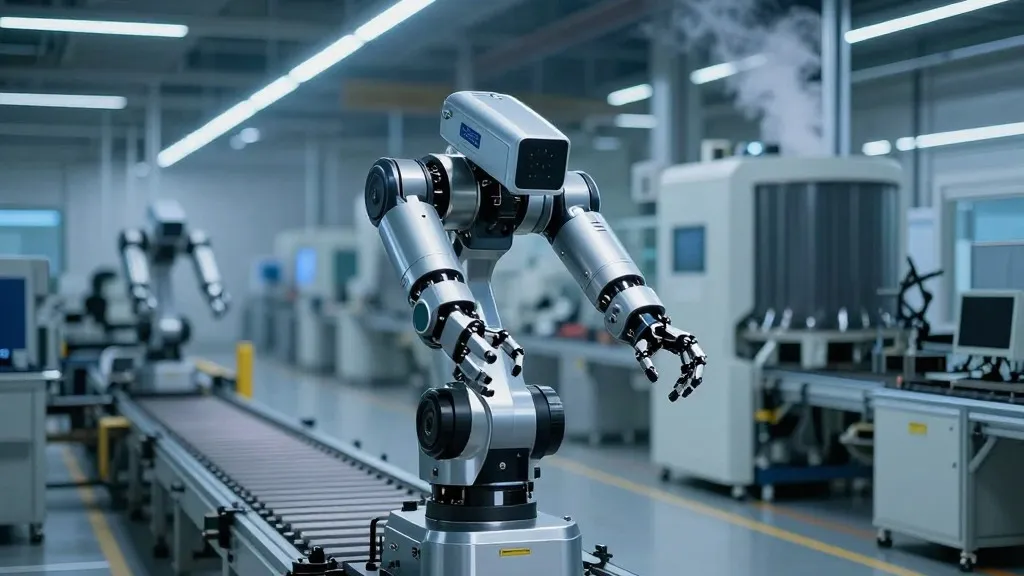
The most cited obstacle is the robot’s hand. A Tesla engineer noted that the hand is one of the most difficult hardware areas to perfect, specifically because fingers must be soft enough for delicate manipulation yet robust enough to withstand constant wear. Unlike human skin, the robot’s components cannot heal, leading to reliability concerns with custom gears and touch sensors. Musk agreed that the hand is the primary bottleneck, alongside the need for the AI to move beyond scripted routines.
To solve the AI problem, Tesla faces a unique challenge: it lacks a massive fleet of robots collecting data in the wild, unlike its car fleet for Full Self-Driving. To compensate, the company plans to build 10,000 to 20,000 robots to practice tasks in an internal "Optimus Academy." Additionally, Tesla intends to integrate its AI5 chip into Optimus around April 2027. Musk promised a video within one to two months showing the robot executing unprogrammed tasks, aiming to prove the technology works beyond demo scripts.
This latest timeline follows a series of previous adjustments. In 2024, Musk suggested internal use in 2025 and high-volume external sales in 2026. By early 2025, he projected 10,000 units would be built that year, with thousands performing useful work by year-end, a goal he later admitted was not met. The Q3 shareholder letter now describes the current output as the first "production-quality" bots, implying that prior units were not of the same standard.
Musk argued on the call that no competitor is close to Tesla’s progress in general-purpose humanoids. However, rivals are making distinct strides. XPeng activated an automated production line for its IRON robot in Guangzhou in September, with plans for mass production by late 2026 and deliveries starting in the first half of 2027, initially for stores and malls. Meanwhile, Boston Dynamics began producing its electric Atlas in January and has committed all its 2026 deployments, including to Google DeepMind.
Boston Dynamics has taken a pragmatic approach to the hand problem, prioritizing sturdy industrial grippers over human-like dexterity. The company opened a training center at Hyundai’s Metaplant in Georgia in September, where Atlas is learning to sequence car parts. Hyundai aims to deploy 25,000 robots across its plants in the coming years. Notably, Boston Dynamics hired Milan Kovac, Tesla’s former head of Optimus, in January, signaling a shift in industry talent.
While Tesla may lead in the number of robots built, the sector is grappling with the same fundamental issues: creating hands that survive real work, ensuring reliability, and developing AI that can generalize to new tasks. As competitors like XPeng and Boston Dynamics move toward committed commercial deployments, Tesla’s late-2027 target must be met to maintain its competitive edge in the emerging robotics market.
Source: Electrek