2,500 Hebron Residents Face Displacement as Israeli Forces Launch Demolition Campaign
Israeli military operations in the West Bank city have leveled streets and displaced hundreds of families just days before a general election.
By Brianna Jackson ·
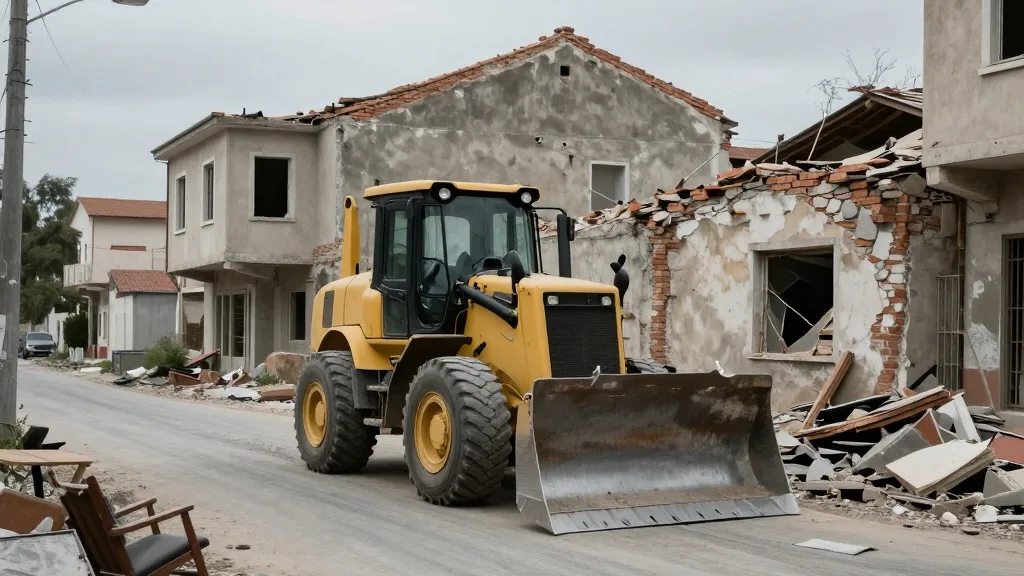
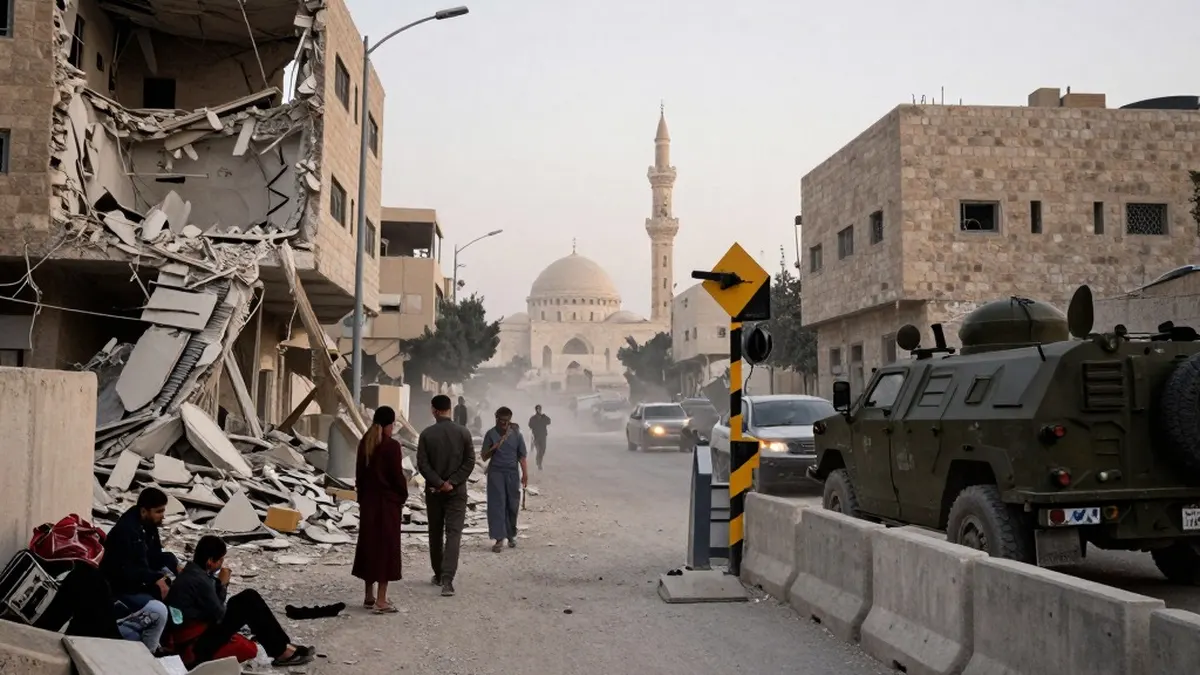
A tense standoff has erupted in the occupied West Bank city of Hebron, where Israeli forces have initiated a sweeping military operation that has already displaced hundreds of families. Local officials report that bulldozers have leveled entire streets, turning homes and businesses into rubble. The scale of the destruction has drawn immediate attention, with footage circulating online showing the extent of the damage and the disruption to daily life for the city's 200,000 residents.
The conflict intensified on Friday when Prime Minister Benjamin Netanyahu announced the operation following a deadly attack on a checkpoint. Two Israeli soldiers were killed and three others wounded by Palestinian gunmen. Both attackers were shot dead during the incident. In response, Netanyahu declared that buildings near the attack site and the neighborhoods the gunmen originated from would be destroyed. The Israel Defense Forces stated in a social media post that they had dozens of targets across the West Bank and that operations would continue for several days.
The timeline of events leading to the current crisis began with the checkpoint attack, which provided the immediate justification for the military surge. Netanyahu, who is facing a general election in four days, framed the operation as a necessary security measure. He compared the current actions to campaigns in northern refugee camps in 2025, where the military destroyed hundreds of homes and displaced tens of thousands. Israeli rights groups have historically criticized the practice of demolishing homes of suspected attackers as a form of collective punishment, a view that has gained traction among local observers in Hebron.
On the ground, the focus of the operation has been on the Ein Deir Baha and Farsh al-Hawa neighborhoods. Mayor Youssef al-Jaabari described the scope of the damage, noting that homes, businesses, industrial sites, and infrastructure have all been affected. He reported that dozens of families were forced to spend the night outdoors, with some residents told to leave without their vehicles. Houses were marked for demolition with spray paint, signaling the military's intent to clear specific urban areas.
The immediate impact on the population is significant. The city's governor and deputy mayor confirmed that at least 200 families have been displaced so far. However, Mayor al-Jaabari estimates that the military intends to displace approximately 2,500 people from roughly 0.35 square kilometers of urban land. The army has sealed off the city, sharply limiting the movement of its residents and creating a closed environment where the operation is unfolding in real time.
Political dynamics in Israel have played a visible role in the escalation. Netanyahu cancelled his party's campaign events on Friday morning to travel to Hebron, where he appeared in protective armor and posted video from the scene. He stated that the forces would evacuate residents, search house by house for weapons, and destroy terrorist infrastructure. This direct involvement by the prime minister has led local leaders to believe the timing is strategic.
Looking ahead, the situation remains fluid. Netanyahu mentioned that he had reviewed plans for the largest military operation in the West Bank since 1967, though he did not specify when this broader campaign might begin. It is currently unclear if the Hebron operation is a precursor to that larger plan. In an interview with i24 television channel released on Saturday, he hinted at a significant surprise for the Palestinian Authority, which governs parts of the territory.
Reactions from both sides of the conflict have been sharp. The Palestinian Authority called for urgent international action that goes beyond mere condemnation to prevent further forced displacement. Within the Israeli government, voices have grown louder for a more aggressive approach. Finance Minister Bezalel Smotrich urged for a campaign in the West Bank similar to those in Gaza or Lebanon, while National Security Minister Itamar Ben Gvir called for the dismantling of the Palestinian Authority.
The coming days will be critical as the military operations continue. The general election is approaching, and the outcome of the Hebron campaign may influence voting patterns. Mayor al-Jaabari told journalists that the operation is driven by the election, suggesting that Netanyahu and his ministers are aiming to secure votes from the far right and settlers. As the dust settles on the leveled streets, the question of how many more families will be displaced remains unanswered.
For now, the focus remains on the immediate humanitarian impact and the military's stated goals. The IDF has indicated that the operations will last for several days, meaning the displacement and demolition are likely to continue. The international community is watching closely, with calls for action growing louder as the number of displaced residents climbs. The balance between security objectives and civilian impact is at the center of this developing crisis.
Source: BBC News