Federal Proposal Would Standardize Cyan Lights For Self-Driving Vehicles
Federal regulators are proposing a specific blue-green light to clearly signal when an automated driving system is behind the wheel.
By Camila Rodriguez ·
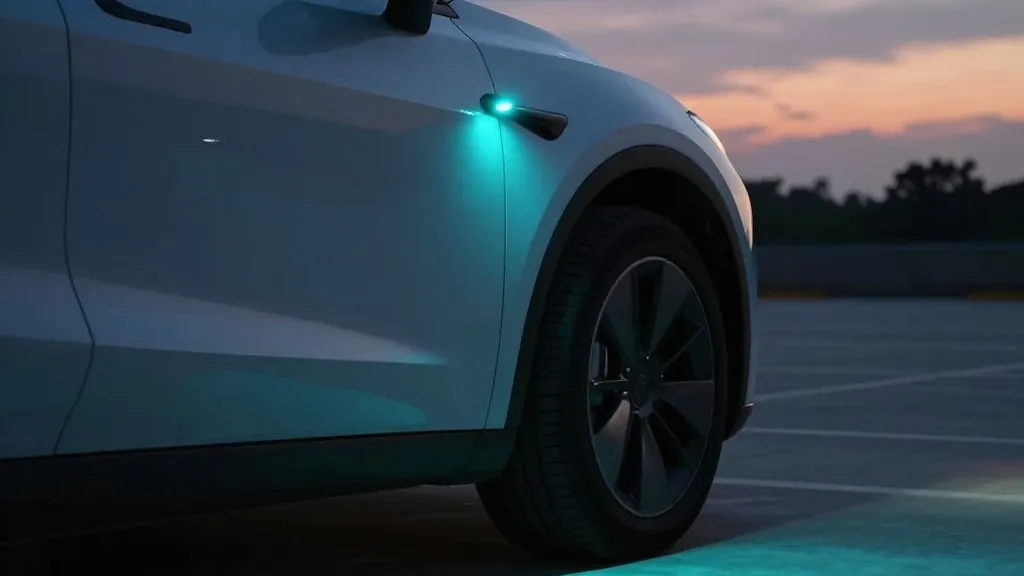
Federal regulators are proposing a specific blue-green light to clearly signal when an automated driving system is behind the wheel. The proposal would create a uniform visual cue for drivers, pedestrians, and law enforcement that a vehicle is operating itself. This is a step toward standardizing how driverless cars communicate with the world around them, a question that has been debated for years without a single answer. The National Highway Traffic Safety Administration (NHTSA) has released proposed changes to Federal Motor Vehicle Safety Standard (FMVSS) No. 108 to address this.
The agency is proposing to add cyan-colored marker lamps to clearly and consistently signal to law enforcement and other road users when an automated driving system is operating the vehicle. The choice of cyan is deliberate: the auto industry already uses red, amber, white, and flashing blue/red lights for functions like brakes, turn signals, headlights, and emergency vehicles. A distinct blue-green could therefore fill a visual gap without confusing road users. The proposal aims to set a national standard that robotaxi operators and automakers can adopt uniformly, building on a precedent set when Mercedes-Benz received state-level approval for similar lights on its Level 3 Drive Pilot cars. While that specific system was later scrapped, the idea of a unique signal for autonomous operation remains.
A key caveat is that the use of these cyan lights would be optional for manufacturers. However, by creating official federal standards for their color, brightness, and location, NHTSA wants to ensure that any automaker who chooses to add them uses a consistent and legal setup. This approach avoids a confusing mix of different colors and signals across the industry, which would undermine the goal of creating a clear, universal indicator. The proposal also aims to remove some lighting requirements that would not make sense for a vehicle without a human driver, such as physical hazard switches, manual beam shifters, and turn levers inside the vehicle.
This update is part of a broader push by the Department of Transportation to streamline the deployment of autonomous vehicles. The government wants to make it easier for automakers to build cars without traditional controls, such as steering wheels and pedals, that are meant for vehicles operated by human drivers. It is also considering getting rid of requirements dictating whether high-beam lights sit above or below low-beam lights. This proposal seeks to standardize signals for autonomous operation, while regulators continue to enforce existing rules in other areas, such as the recent audit of the Tesla Cybercab concerning the absence of sideview mirrors, pedals, and a steering wheel.
Source: The Verge